


Patrocinado
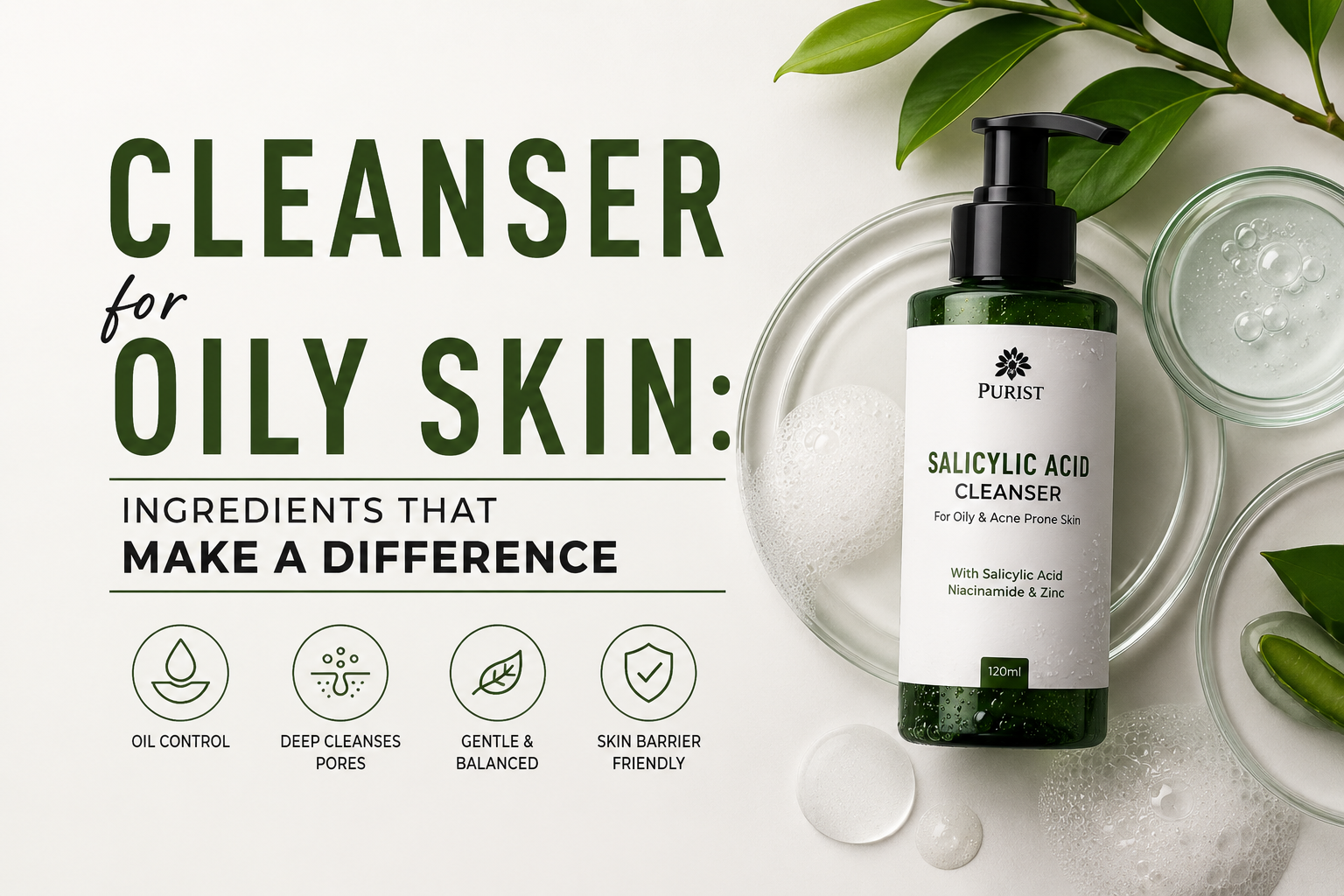
Cleanser for Oily Skin: Ingredients That Make a Difference
Cleanser for Oily Skin: Ingredients That Make a Difference
Oily skin can be frustrating to manage. Your face may look shiny only a few hours after washing, pores can appear more noticeable, and excess sebum may contribute to blackheads and breakouts. The obvious solution seems to be a cleanser that removes as much oil as possible.
That approach can backfire.
A good cleanser for oily skin should remove excess oil, sweat, sunscreen, makeup, and daily buildup without leaving the skin feeling tight, rough, or irritated. The ingredients matter, but so does the overall formulation and how often you use it.
Dermatologists generally recommend gentle cleansing rather than aggressive scrubbing or repeated washing. The American Academy of Dermatology advises people with oily or acne prone skin to use a gentle, non abrasive cleanser and avoid irritating the skin.
What Makes a Cleanser Suitable for Oily Skin?
Oily skin produces more sebum than it needs to maintain its natural barrier. Sebum itself is not the enemy. The problem can arise when excess oil combines with dead skin cells and other material around the pores.
This is why choosing a cleanser is less about finding the strongest formula and more about finding the right balance.
A suitable cleanser should effectively remove surface impurities while maintaining comfortable skin. If your face feels extremely tight or uncomfortable immediately after cleansing, the formula may be too harsh for your skin or you may be cleansing too frequently.
The goal is clean skin, not stripped skin.
Products labelled non comedogenic or oil free can also be useful for people who are prone to clogged pores. The NHS recommends water based, non comedogenic skincare for acne prone skin because these products are less likely to block pores.
Salicylic Acid for Excess Oil and Clogged Pores
Salicylic acid is one of the most recognised ingredients for oily and blemish prone skin.
It belongs to a group of ingredients called beta hydroxy acids, commonly known as BHAs. Salicylic acid is oil soluble, which allows it to work effectively within oily areas and pores. The American Academy of Dermatology notes that salicylic acid cleansers can help unclog pores and may be useful for people dealing with acne.
This makes salicylic acid particularly relevant when oily skin is accompanied by blackheads, whiteheads, or frequent congestion.
However, more is not automatically better. Concentration, contact time, frequency of use, and your individual skin tolerance all matter. Salicylic acid can cause dryness or irritation in some people, especially when combined with several other potentially irritating products.
The FDA identifies salicylic acid among the active ingredients used in over the counter acne products and lists concentrations from 0.5% to 2% under its acne drug framework.
Niacinamide and the Importance of a Balanced Formula
Niacinamide, a form of vitamin B3, is another ingredient frequently found in modern skincare designed for oily and combination skin.
Unlike an exfoliating acid, niacinamide is not primarily used to remove dead skin cells. It is valued for its role in supporting the skin barrier and helping skin appear more balanced.
This distinction matters because oily skin can still become dehydrated or irritated. Excess sebum does not mean the skin has unlimited tolerance for aggressive cleansing.
When choosing a cleanser, therefore, consider the complete formula rather than judging it by one headline ingredient. A well designed cleanser should fit into a wider routine rather than attempting to solve every skin concern in a single wash.
Gentle Cleansing Agents Matter Too
The cleansing agents, or surfactants, determine how a cleanser lifts oil and impurities from the skin.
Very aggressive cleansing can leave some people with a tight or uncomfortable feeling. That does not necessarily mean the cleanser has done a better job.
For oily skin, look for a formula that leaves the face clean and comfortable rather than excessively dry. Fragrance can also be an issue for people with sensitive skin. The American Academy of Dermatology recommends gentle skincare and notes that fragrance free products may be preferable for people prone to irritation.
This is particularly important if you are already using other active ingredients elsewhere in your routine.
Should You Use a Cleanser Twice a Day?
For many people with oily skin, cleansing morning and evening can be reasonable. The American Academy of Dermatology recommends washing the face gently up to twice daily and after sweating when managing acne.
But washing more often is not necessarily better.
The NHS similarly advises people with acne not to wash affected skin more than twice a day because frequent washing can irritate the skin and worsen symptoms.
If your skin feels dry, burning, unusually sensitive, or persistently tight after cleansing, reconsider the frequency and strength of the products in your routine.
Avoid the Trap of Over Cleansing
One of the biggest mistakes people with oily skin make is trying to eliminate every trace of oil.
Scrubbing harder, using harsh cleansers, or repeatedly washing your face may leave the skin irritated rather than healthier. Dermatologists specifically advise against vigorous scrubbing because irritation can make acne prone skin worse.
Instead, massage the cleanser gently with your fingertips and rinse with lukewarm water. There is no need to use abrasive tools to make the skin feel exceptionally clean.
Think of cleansing as maintenance, not punishment.
How to Choose the Right Cleanser for Your Skin
The best cleanser depends on more than whether your skin is oily.
If you have oily skin with frequent blackheads or congestion, a cleanser containing salicylic acid may be worth considering. If your skin is oily but easily irritated, a simpler and gentler formula may be more appropriate.
For combination skin, you may need to pay attention to how different areas respond. Your forehead and nose may become oily while your cheeks feel normal or dry.
Also consider what else you use. If your routine already contains exfoliating acids, retinoids, benzoyl peroxide, or other active ingredients, adding several strong products at once may increase irritation.
A skincare routine does not need to be complicated to be effective.
A Simple Routine for Oily Skin
A practical routine can start with a suitable cleanser, followed by a lightweight moisturiser and daily broad spectrum sunscreen.
In the evening, cleanse to remove accumulated oil, sunscreen, makeup, and environmental residue. If you use an active cleanser such as one containing salicylic acid, follow the product directions and monitor how your skin responds.
Do not immediately add multiple new actives because you want faster results. Skin often responds better to consistency than constant product switching. Dermatologists also emphasise giving acne treatments sufficient time to work rather than changing products repeatedly.
For people looking for targeted facial cleansers, you can compare suitable options in Purist's cleanser collection and choose a formula according to your skin's needs.
When Oily Skin Needs More Than a Cleanser
A cleanser can support a good skincare routine, but it cannot treat every cause of persistent acne or skin irritation.
If you develop painful nodules, cysts, significant inflammation, scarring, or acne that does not improve with appropriate skincare, professional medical advice is important. The NHS notes that severe acne can cause permanent scarring and may require medical treatment.
Similarly, persistent burning, swelling, rash, or significant irritation should not simply be treated by switching between cleansers.
Final Takeaway
Choosing a cleanser for oily skin is not about removing every last trace of oil. It is about finding a formula that cleans effectively while respecting the skin barrier.
Ingredients such as salicylic acid can be useful when clogged pores and blemishes are concerns, while supportive ingredients and gentle cleansing agents can help create a more balanced routine. The right choice also depends on your skin's sensitivity, existing products, and how often you cleanse.
A thoughtful skincare routine focuses on consistency, tolerability, and evidence rather than aggressive cleansing. When you choose ingredients based on what your skin actually needs, your cleanser becomes more than a basic washing step. It becomes a practical foundation for healthier looking skin.
Patrocinado
Categorias
- Core Faith & Theology
- Christian Lifestyle & Practical Living
- Community & Church Life
- Creative & Inspirational Content
- Cultural Engagement & Outreach
- Practical Ministry & Resources
- Niche & Specialized Blogs
- Seasonal & Themed Content
- Interactive & Community-Driven Content
- Humor & Relatable Content
- Outro
Leia mais
Energy costs aren’t what they used to be. For most businesses today, electricity isn’t just an operational expense—it’s a major factor that directly impacts profitability. That’s exactly why more companies are shifting toward Solar Panel For Commercial use, not just as a sustainability move, but as a smart financial decision. If you’re considering going solar...
Keeping clothes fresh, clean, and vibrant is a top priority for households across Pakistan. With countless options available in the market, finding a reliable laundry detergent in pakistan can be challenging. Among the various brands, Pride Detergent Powder stands out as a trusted choice for families seeking superior cleaning performance at an affordable price. This blog post delves into why...
" According to the latest report published by Data Bridge Market Research, the Beauty Devices Market The global beauty devices market was valued at USD 2.49 billion in 2024 and is expected to reach USD 3.18 billion by 2032 During the forecast period of 2025 to 2032 the market is likely to grow at a CAGR of 3.10%, primarily driven by rising prevalence of skin...

" According to the latest report published by Data Bridge Market Research, the Over the Counter (OTC) Braces Market The global over the counter (OTC) braces market size was valued at USD 774.7 Million in 2025 and is expected to reach USD 1391.97 Million by 2033, at a CAGR of 7.60% during the forecast periodThe market growth is largely fueled by the growing adoption and technological...
According to the latest report published by Data Bridge Market Research, the Blended Meat Market Market insights provided in the most excellent Blended Meat Market report, it becomes easy to gain a more precise understanding of the market landscape, issues that may take place for the Blended Meat Market industry in the future, and how to position specific brands in the best...
