Introduction
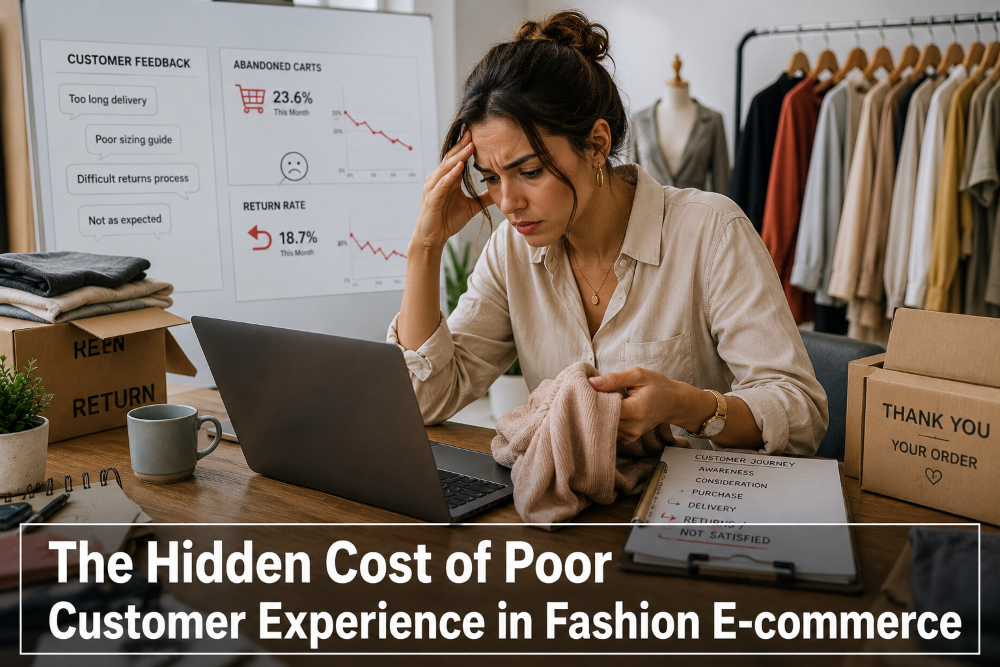
A shopper finds the perfect jacket online, but the page loads slowly, the size guide is unclear, and shipping costs appear only at checkout. The item arrives with a poor fit, while support takes four days to respond. The sale may appear complete, yet the experience has created costs. The brand may pay for a return, issue a refund, handle support requests, receive a negative review, and lose future purchases. Customer experience is therefore a business strategy for protecting revenue, trust, and growth.
What Does Poor Customer Experience Really Cost a Fashion Brand?
Visible costs include abandoned carts, refunds, return shipping, replacement orders, support labor, and lost conversions. Hidden costs include reduced recommendations, lower future spending, and extra advertising needed to replace customers better service might have retained. Judge each order by more than revenue. Track contribution margin after returns and support, retention, repeat purchases, and customer lifetime value. A profitable transaction can still be damaging if it makes future purchases unlikely.
Lost Sales Often Start With Small Friction Points
The online shopping experience can break down through slow pages, confusing navigation, weak mobile design, unclear prices, missing payment methods, unexpected shipping fees, or an overlong checkout. Each creates doubt at the moment a shopper decides whether to continue. Baymard’s checkout research identifies extra costs, slow delivery, lack of trust, forced account creation, complicated checkout, site errors, and unsatisfactory return policies among common abandonment reasons . The lesson is not that every abandoned cart is preventable; some shoppers are only browsing. It is that avoidable friction can turn genuine purchase intent into lost revenue. Test the journey on a phone from discovery through payment. Show total costs early, allow guest checkout, and make stock, shipping, and returns easy to find.
Inaccurate Product Expectations Lead to Costly Returns
Customers cannot touch fabric, inspect construction, or try on a garment before buying. Product descriptions and photography must therefore set accurate expectations. If images hide transparency, measurements are incomplete, or fabric details are vague, the customer may receive something different from what they imagined. Returns consume warehouse time, payment fees, support capacity, and marketing effort. If an item cannot be resold at full value, the margin loss increases. Clear descriptions, multiple views, fabric information, model measurements, and honest fit notes reduce uncertainty.
Poor Sizing Experiences Damage Trust
Sizing is difficult in online fashion. Inconsistent collection measurements, generic charts, and vague language such as “runs true to size” can create hesitation—or encourage shoppers to order multiple sizes and return most of them.
Publish garment measurements, explain how to measure, identify the model’s size and proportions, and describe whether a style is fitted, relaxed, cropped, or oversized. Fit-focused reviews can improve customer confidence and future products.
Weak Customer Support Turns Small Problems Into Bigger Ones
A late parcel or incorrect size does not automatically end a relationship. Slow responses, generic replies, unclear ownership, and difficult return instructions often do. Customers want clear ownership and resolution timing. Make policies clear and give staff authority to solve routine problems. Recurring tickets may reveal a product-page, sizing, or delivery-information problem. Fixing the root cause is more valuable than repeated apologies.
Delivery and Post-Purchase Experience Are Part of the Brand
The journey continues after payment. Accurate confirmation, useful tracking, reliable delivery windows, proactive delay messages, and simple returns influence trust. Details such as Custom Apparel boxes with logo can contribute to a consistent experience, but cannot compensate for poor fit or weak service.
Fashion returns guidance emphasizes clarity about time limits, cost, convenience, refund speed, tracking, and what happens after an item is sent back . These details shape confidence before purchase and satisfaction afterward.
Negative Reviews Create Long-Term Acquisition Costs
An unhappy customer may leave a review, post on social media, or share the experience privately. Future shoppers use these signals to judge trust. Repeated complaints about sizing, delivery, or support can lower conversion.
The hidden cost is replacement marketing: declining trust may require more discounts or paid traffic to produce the same orders. Preventing repeated failures is more valuable than merely responding to criticism.
Losing Repeat Customers Reduces Long-Term Value
The true cost is often the purchase that never happens. A customer may disappear after one unresolved issue, reducing lifetime value and making growth dependent on continually acquiring new shoppers. Track repeat purchases by product, cohort, and complaint history. Compare retention after fast resolutions with retention after delays to see whether improvements protect revenue.
How Fashion E-commerce Brands Can Identify Problems
Review support tickets, return reasons, abandoned carts, reviews, mobile sessions, delivery complaints, and post-purchase surveys. Look for repeated frustrations and confusing handoff points.
A Practical Framework for Improving the Customer Journey
1.Identify the largest friction points by customer impact and cost.
2.Improve product information, photography, measurements, and sizing.
3.Simplify mobile navigation and checkout.
4.Show accurate shipping and return expectations before payment.
5.Set support response standards and analyze recurring complaints.
6.Create consistent order and post-purchase communication.
7.Track repeat purchases, retention, and customer lifetime value.
8.Test improvements continuously.
Conclusion
Poor customer experience costs more than one complaint or refund. For fashion e-commerce brands, friction can reduce conversions, increase returns and support work, weaken trust, damage reputation, and erase future purchases. Brands that remove uncertainty and meet expectations can protect revenue and build durable relationships.